

Food safety management is becoming increasingly complex. As food supply chains expand and production processes become more diversified, companies are facing challenges that cannot be solved by a single test or a single inspection point.
Modern food safety requires a comprehensive testing strategy that connects raw materials, production processes, laboratory analysis, and quality decisions. Instead of simply asking “what should we test?”, food companies are increasingly asking “how can we build a complete food safety control system?”
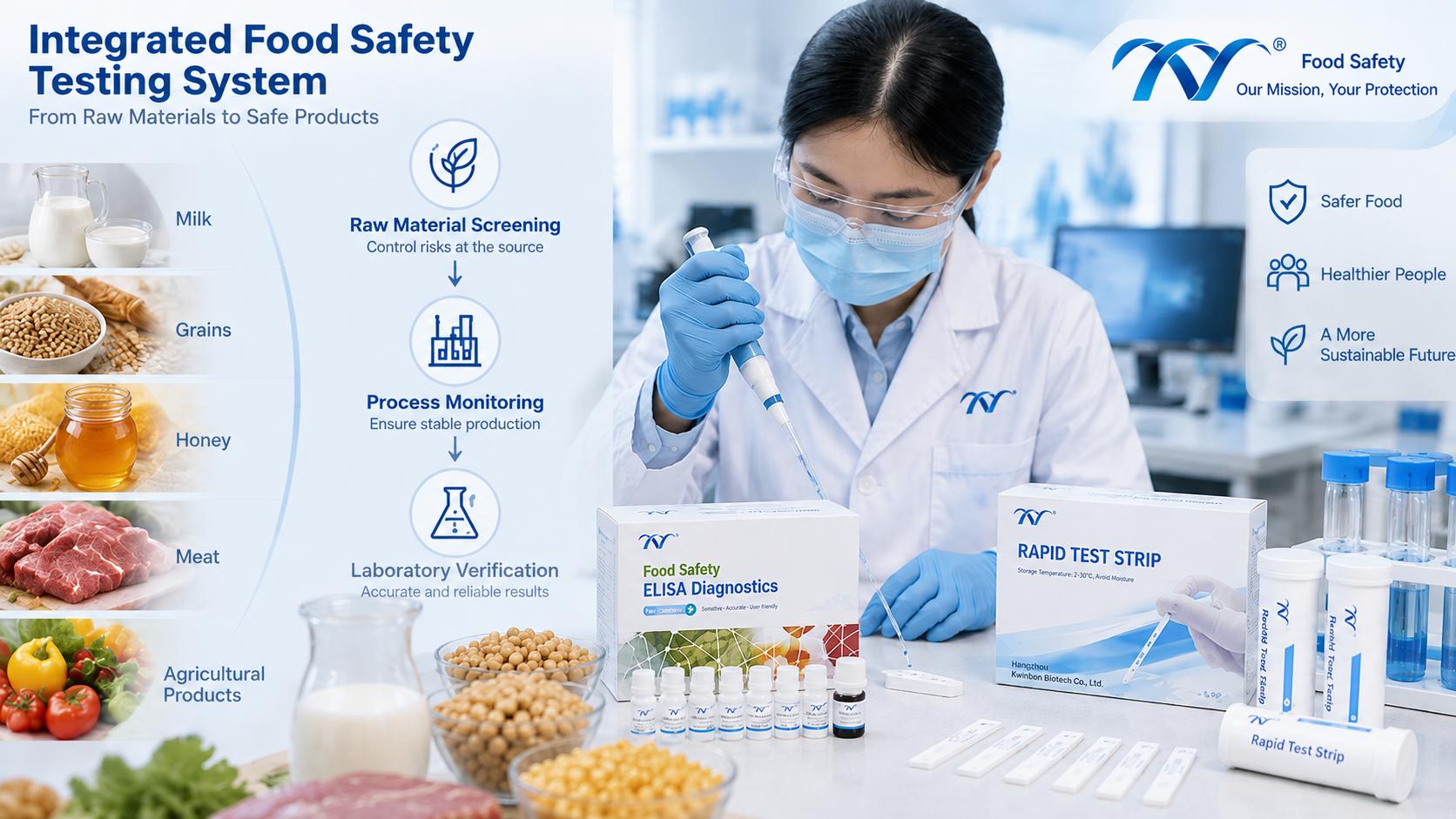
From Single Detection to Systematic Management
Traditional testing programs often focus on individual products or specific contaminants. While this approach can identify certain risks, it may not provide a complete understanding of food safety performance across the entire supply chain.
An integrated testing system considers multiple factors, including:
- · Raw material sources
- · Supplier performance
- · Production conditions
- · Target contaminants
- · Regulatory requirements
- · Historical testing data
By combining these elements, companies can develop more targeted and efficient quality control strategies.
Three Levels of Food Safety Testing
A complete food safety system usually includes three important levels.
1. Raw Material Screening
The first step is controlling risks before production begins.
Raw materials such as milk, grains, feed ingredients, honey, meat products, and agricultural products may carry different safety risks.
Rapid screening technologies allow companies to quickly evaluate incoming materials and identify potential problems before they enter the production process.
2. Process Monitoring
Food safety control should not stop after raw material inspection.
During production, continuous monitoring helps companies detect unexpected risks and maintain stable product quality.
Rapid detection solutions provide convenient tools for routine checks in production environments where quick decisions are required.
3. Laboratory Verification
While rapid screening provides speed and convenience, laboratory analysis remains essential for accurate confirmation.
ELISA technology offers high sensitivity and quantitative analysis capabilities, making it an important method for quality control programs, regulatory compliance, and scientific evaluation.
The combination of rapid screening and laboratory verification creates a balanced approach between efficiency and accuracy.
Technology Enabling Smarter Quality Control
The future of food safety will depend on more connected and intelligent testing strategies.
Companies need solutions that are:
- · Reliable
- · Easy to implement
- · Suitable for different application scenarios
- · Capable of supporting faster decisions
Beijing Kwinbon Technology Co., Ltd. focuses on immunodiagnostic technologies and provides global customers with food safety testing solutions, including rapid test strips and ELISA kits.
With applications covering veterinary drug residues, mycotoxins, pesticides, food additives, and other food safety concerns, Kwinbon supports food manufacturers, laboratories, and inspection organizations in developing more effective testing systems.
Creating a More Reliable Food Safety Future
Food safety is no longer only about detecting problems after they occur. The future belongs to organizations that can identify risks earlier, manage them systematically, and continuously improve their quality control processes.
By combining different testing technologies into an integrated strategy, the food industry can achieve safer production, stronger compliance, and greater consumer confidence.
Post time: Sep-04-2026