

Plant-based foods are moving rapidly from niche products to mainstream choices. Meat alternatives, dairy-free beverages, protein snacks and other formulations increasingly combine cereals, legumes, nuts, seeds, vegetables, spices and oils. This diversity creates opportunities for innovation, but it also changes the way food safety risks should be monitored.
A 2026 study led by the University of Parma and co-authored by Cranfield University examined 212 plant-based meat alternatives and beverages sold in the United Kingdom. Every sample contained at least one of 19 mycotoxins tested, and several products contained more than one. Importantly, the detected levels were below the recommended European Union guideline levels. The finding should therefore not be interpreted as evidence that plant-based products are unsafe. Instead, it highlights how complex formulations can bring together multiple raw-material risk pathways within one finished product. The issue is not simply whether a contaminant is present, but how ingredient combinations influence cumulative exposure and monitoring priorities.
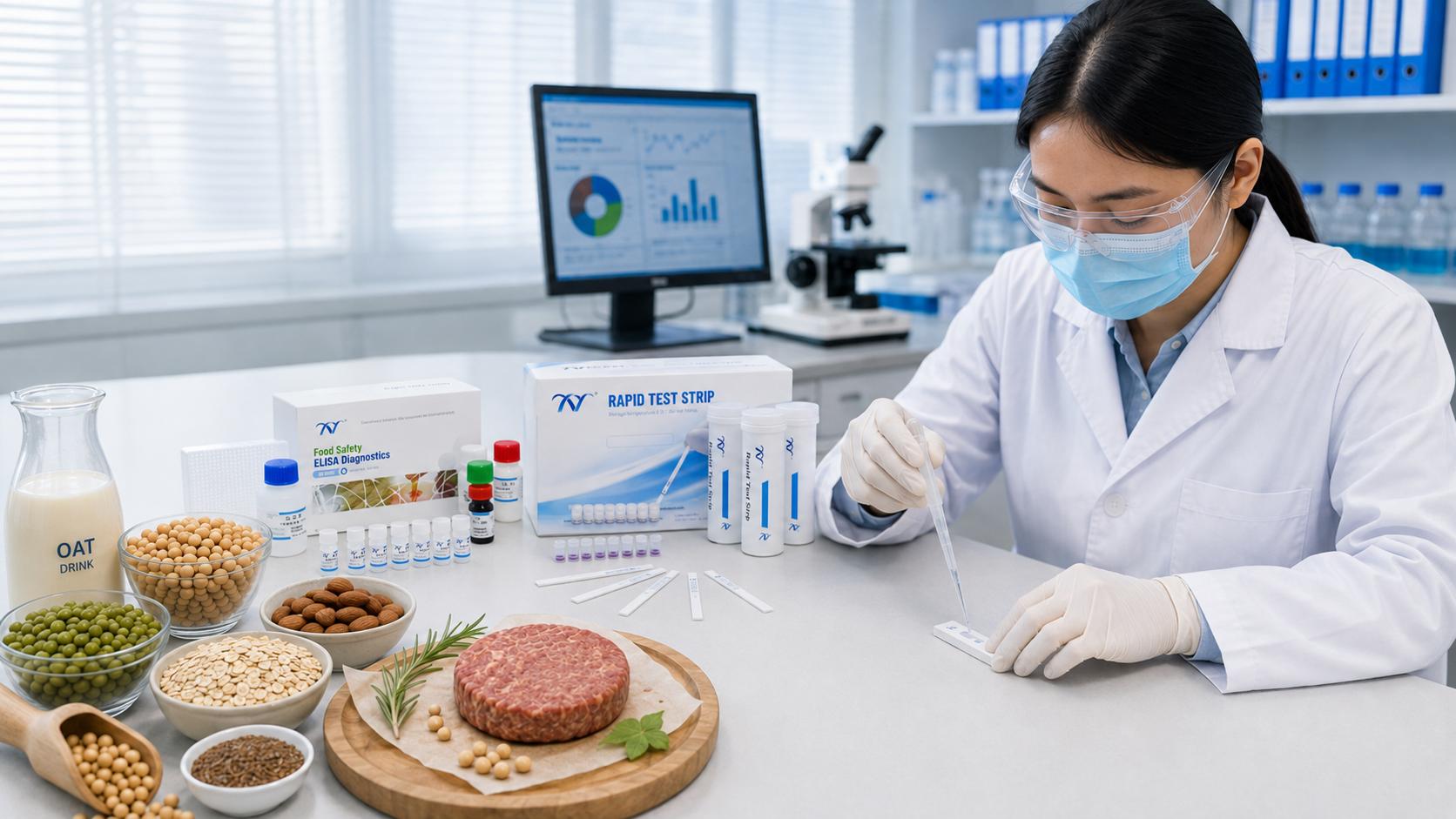
Why Ingredient Complexity Matters
Mycotoxins can develop when susceptible commodities are exposed to mould during cultivation, harvesting or storage. Grains, dried beans, nuts and other plant ingredients can carry different risk profiles depending on origin, season, moisture conditions and supplier controls. The US Food and Drug Administration also identifies grains, dried beans, dried fruits and coffee among the foods that may be susceptible to moulds capable of producing mycotoxins.
For manufacturers, testing only the finished product may provide an incomplete picture. When a result approaches an internal action level, it can be difficult to determine whether the source was oats, soy, peas, nuts or another ingredient. A stronger program begins upstream, with specifications and monitoring plans tailored to each raw material.
From Raw-Material Screening to Batch Verification
At goods reception, rapid test strips can support frequent screening of selected high-risk ingredients before they enter production. This allows quality teams to hold a lot, repeat sampling or investigate a supplier without interrupting the entire manufacturing process. This approach also improves traceability and supplier communication.
For laboratory batch screening, ELISA kits can provide sensitive quantitative analysis for selected contaminants and enable multiple samples to be evaluated efficiently. Where required by regulation or company policy, non-compliant or disputed results should be confirmed using an officially recognized reference method.
The testing frequency should also be dynamic. New suppliers, unfamiliar origins, seasonal weather changes and previous borderline results may justify increased sampling. Consistently compliant suppliers may be managed through a different risk-based schedule.
Building Safety into Product Innovation
Food innovation should be supported by a safety plan that evolves with the formulation. When a new grain, legume, flavouring or protein concentrate is introduced, the hazard assessment and testing plan should be reviewed before commercial production begins.
Beijing Kwinbon Technology Co., Ltd. develops rapid test strips and ELISA kits for food safety applications, including mycotoxins, pesticide residues, food additives and food adulteration. These solutions can support screening and laboratory quality control across relevant raw materials and food matrices when used according to the validated product instructions.
The next generation of plant-based products will be defined not only by taste, nutrition and sustainability, but also by how effectively manufacturers understand and control the risks created by increasingly complex ingredient systems.
Post time: Aug-28-2026