

The global food market is becoming increasingly interconnected. With the continuous growth of international food trade, products often travel across multiple regions before reaching consumers. While global trade creates new opportunities for food businesses, it also brings greater challenges in food safety management and regulatory compliance.
For exporters, ensuring food safety is no longer only about meeting production standards. It has become a key factor affecting market access, brand reputation, and long-term business development.
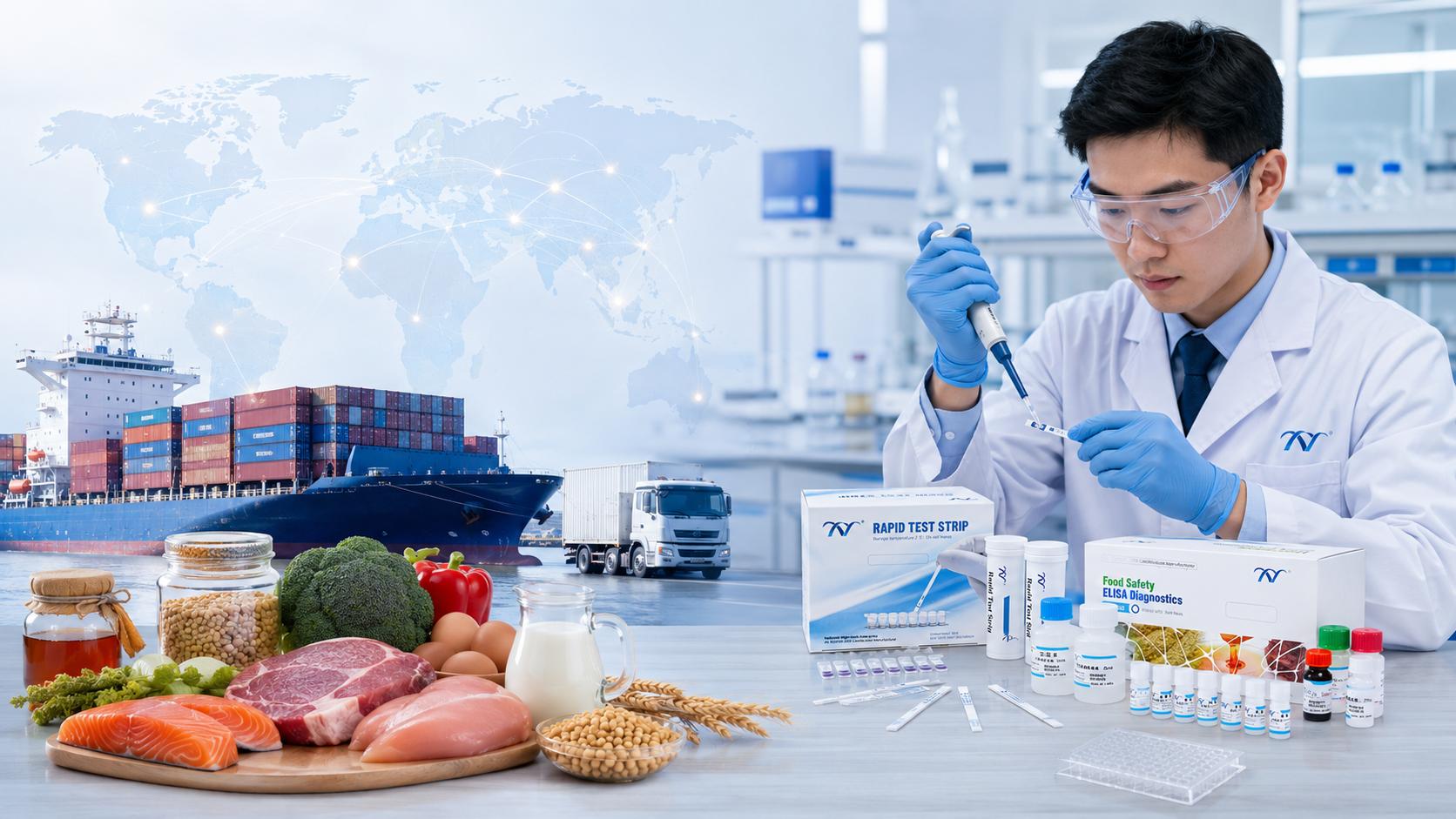
Meeting the Growing Demand for Food Safety Compliance
Different countries and regions continue to strengthen food safety regulations and inspection requirements. Food companies must ensure that their products meet strict standards throughout the entire supply chain, from raw materials to final products.
Potential risks such as veterinary drug residues, pesticide residues, mycotoxins, and food adulteration require effective monitoring strategies. Without reliable testing methods, companies may face product recalls, trade barriers, and economic losses.
As a result, food safety testing has become an essential part of international trade.
Testing Technologies Supporting Global Food Supply Chains
Modern food safety management requires testing solutions that are accurate, efficient, and adaptable to different environments.
Rapid detection technologies provide an effective approach for preliminary screening. Rapid test strips enable users to perform convenient on-site testing at production facilities, farms, warehouses, and inspection locations.
By identifying potential risks at an early stage, companies can make faster decisions and improve their quality control efficiency.
For more detailed analysis and confirmation, laboratory-based technologies such as ELISA testing provide sensitive and reliable detection capabilities. Combining rapid screening with laboratory verification allows companies to build a comprehensive food safety management system.
Building Confidence Across International Markets
For food exporters, testing is not only a technical process but also an important tool for building trust.
Reliable testing results help companies demonstrate product quality, improve supply chain transparency, and strengthen cooperation with international partners.
In global food trade, companies that can provide consistent quality assurance are better positioned to meet changing market requirements and maintain competitiveness.
Kwinbon: Supporting Global Food Safety Through Innovation
Beijing Kwinbon Technology Co., Ltd. focuses on the research and development of immunodiagnostic technologies and provides global customers with professional food safety testing solutions.
With rapid test strips, ELISA kits, and related detection products, Kwinbon supports food manufacturers, laboratories, and inspection organizations in improving testing efficiency and strengthening quality control systems.
Through continuous innovation and international cooperation, Kwinbon is committed to helping partners worldwide achieve safer food production and more reliable global trade.
Creating a More Transparent Future for Food Trade
As global food supply chains continue to expand, food safety compliance will become increasingly important.
Advanced testing technologies will play a critical role in helping companies identify risks, meet regulatory requirements, and build consumer confidence.
By combining rapid detection capabilities with accurate laboratory analysis, the food industry can move toward a safer, more transparent, and more sustainable future.
Post time: Aug-13-2026