

The global food industry is undergoing significant changes. As international food trade expands and supply chains become increasingly complex, food safety management is no longer limited to final product inspection. Instead, companies, regulators, and laboratories are moving toward faster, smarter, and more proactive approaches to risk prevention.
In 2026, several key trends are reshaping the global food safety testing industry.
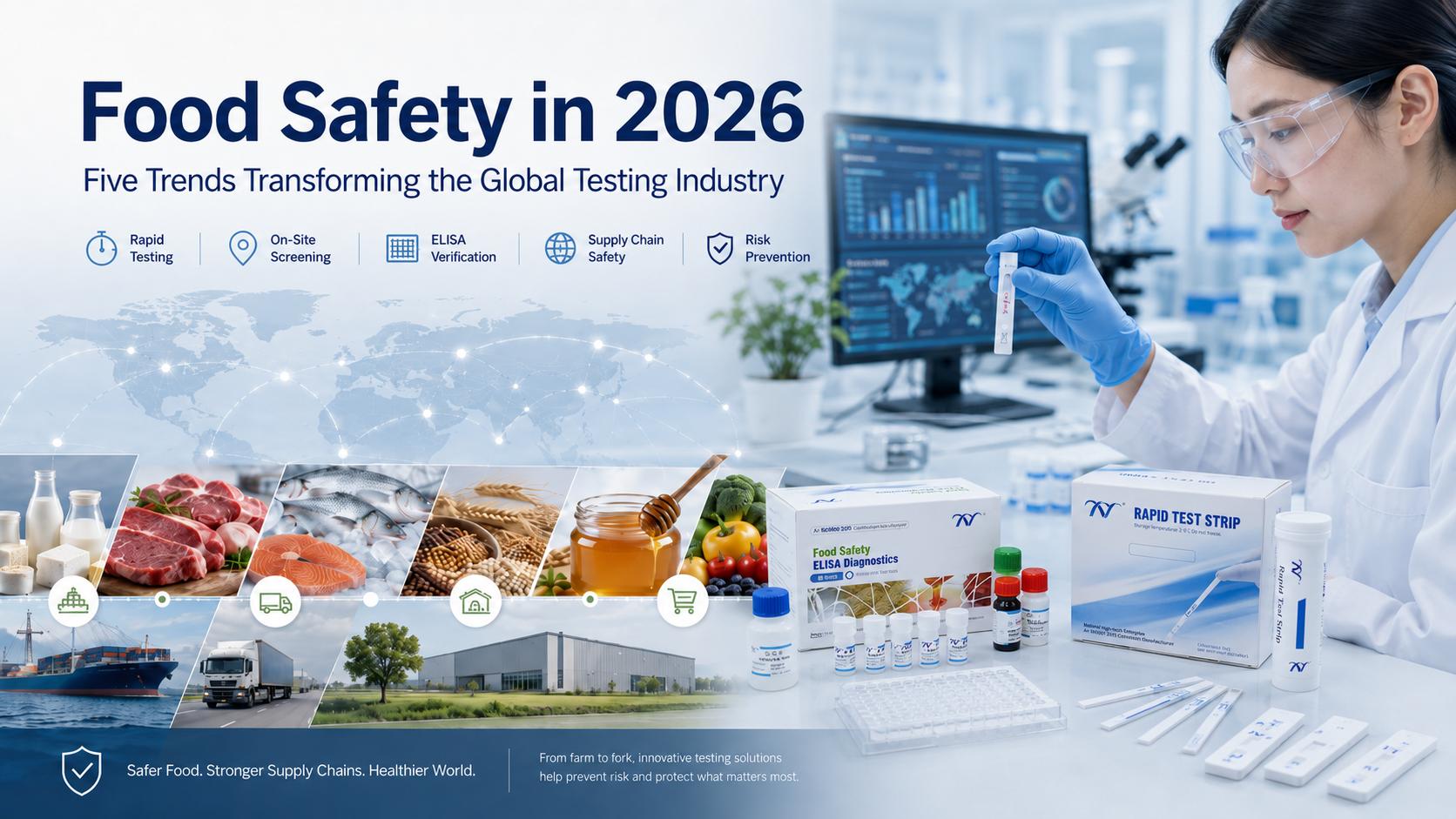
1. Faster Testing for Faster Decisions
In modern food production, time is critical. Whether monitoring raw materials, controlling production processes, or inspecting imported products, waiting several days for laboratory results may no longer meet operational needs.
Rapid detection technologies are becoming increasingly important because they enable users to identify potential risks quickly and make timely decisions. On-site screening solutions, including lateral flow test strips, are helping food producers and inspectors improve efficiency while maintaining reliable detection performance.
2. Expanding Detection Needs Across the Food Chain
Food safety risks continue to evolve. Traditional concerns such as veterinary drug residues and pesticide residues remain important, while emerging risks including mycotoxins, food adulteration, and new contaminants require continuous monitoring.
A comprehensive food safety strategy requires flexible detection platforms that can support different applications across dairy products, meat, seafood, honey, grains, feed, and other food categories.
3. The Growth of Decentralized Testing
Food safety testing is gradually moving beyond centralized laboratories. More companies are adopting decentralized testing models, where screening can be performed closer to farms, factories, warehouses, and inspection sites.
This trend reduces response time, improves supply chain transparency, and allows potential risks to be controlled at an earlier stage.
4. Combining Rapid Screening with Laboratory Verification
While rapid tests provide speed and convenience, laboratory-based technologies remain essential for accurate analysis and quality assurance.
The combination of rapid screening methods and ELISA-based quantitative testing creates a more complete food safety management system — enabling both quick risk identification and reliable confirmation.
5. Innovation Driving the Future of Food Safety
Technology innovation continues to be the foundation of food safety development. Advanced immunodiagnostic technologies, improved sensitivity, and more convenient testing formats are helping organizations worldwide build stronger safety control systems.
As a professional food safety testing company, Beijing Kwinbon Technology Co., Ltd. has continuously focused on immunoassay technology development, providing global customers with rapid test strips, ELISA kits, and comprehensive detection solutions.
With extensive experience in food safety diagnostics and a commitment to innovation, Kwinbon works closely with partners around the world to support safer food production and more efficient quality management.
The future of food safety will not only depend on detecting problems, but on preventing them earlier. Through continuous technological advancement, rapid testing solutions will play an increasingly important role in creating a safer and more transparent global food system.
Post time: Jul-23-2026