

Food safety is no longer a local concern. From farms and processing plants to cross-border trade and retail shelves, every link in the food supply chain is under growing pressure to deliver products that are safe, traceable and compliant. In 2026, the theme of World Food Safety Day, “From burden to solutions – safe food everywhere,” reminds the global food industry that foodborne risks are preventable when science-based tools are used at the right time and in the right place.
Recent food safety events continue to show how diverse these risks can be. In the United States, FDA and USDA notices have included undeclared allergens, mislabeling, foreign material contamination and microbiological hazards. A Salmonella outbreak linked to moringa leaf powder, for example, has affected consumers across multiple states, while recall notices in June 2026 again highlighted the importance of allergen control and accurate labeling.
For global food producers, importers, laboratories and regulators, these incidents point to one clear message: food safety management must move faster. Traditional laboratory testing remains essential, but many decisions in modern supply chains need rapid screening before raw materials are accepted, products are released, or shipments enter international markets.
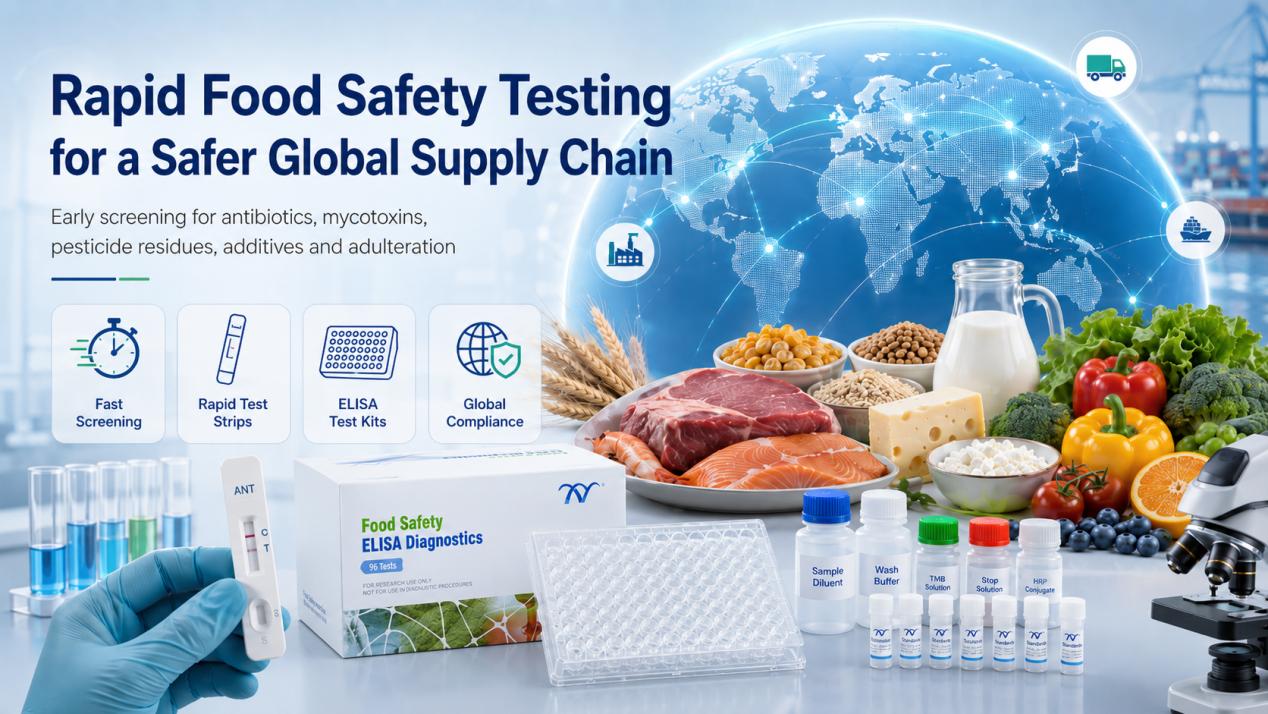
This is where rapid testing technologies create value. Rapid test strips and ELISA test kits can help identify potential risks such as antibiotic residues, pesticide residues, mycotoxins, hormones, food additives and adulteration indicators. By enabling earlier detection, they support faster decision-making, reduce the risk of non-compliant products reaching consumers, and help companies protect brand reputation.
At Beijing Kwinbon Technology Co., Ltd., food safety testing is at the center of our work. Kwinbon provides a broad range of rapid test strips and ELISA test kits for food safety applications, covering key risk areas including antibiotics, mycotoxins, pesticides, food additives, hormones used in animal feeding and food adulteration. With strong R&D capabilities, GMP production facilities and an established antigen and antibody library, Kwinbon continues to support customers with practical, efficient and reliable testing solutions.
The global food industry is also facing new challenges. Climate change may increase the risk of existing and emerging foodborne hazards by affecting temperatures, water quality, precipitation patterns and agricultural conditions. Meanwhile, international trade means that one safety issue can quickly affect multiple markets. Rapid alert systems such as the EU’s RASFF show the importance of timely information exchange and preventive action.
Food safety is built through prevention, not reaction. For dairy processors, meat and seafood suppliers, grain and feed producers, fruit and vegetable exporters, and third-party laboratories, rapid testing is becoming an important part of daily quality control.
As global expectations rise, Kwinbon is committed to helping partners turn food safety challenges into practical solutions. Through rapid, accessible and science-based testing products, we aim to support safer supply chains, stronger compliance and greater consumer confidence worldwide.
Post time: Jun-26-2026