

Food safety management is entering a new stage. In the past, testing was often considered a final checkpoint before products reached consumers. Today, as global food supply chains become more complex and regulatory requirements continue to increase, food companies are shifting from problem detection to proactive risk prevention.
Preventive food safety management is becoming a key strategy for manufacturers, suppliers, and inspection organizations worldwide. By identifying potential risks earlier, companies can improve quality control, reduce product recalls, and build stronger consumer trust.
From Final Inspection to Continuous Monitoring
Traditional food safety management often relied heavily on testing finished products. However, a single inspection at the end of the production process may not provide sufficient protection against rapidly changing risks.
Modern food safety systems are moving toward continuous monitoring throughout the entire production chain, including raw material selection, processing, storage, and distribution.
This approach allows companies to identify potential contamination risks at an earlier stage and take corrective actions before products enter the market.
Faster Screening Supports Better Risk Control
One of the most important developments in preventive food safety is the increasing use of rapid detection technologies.
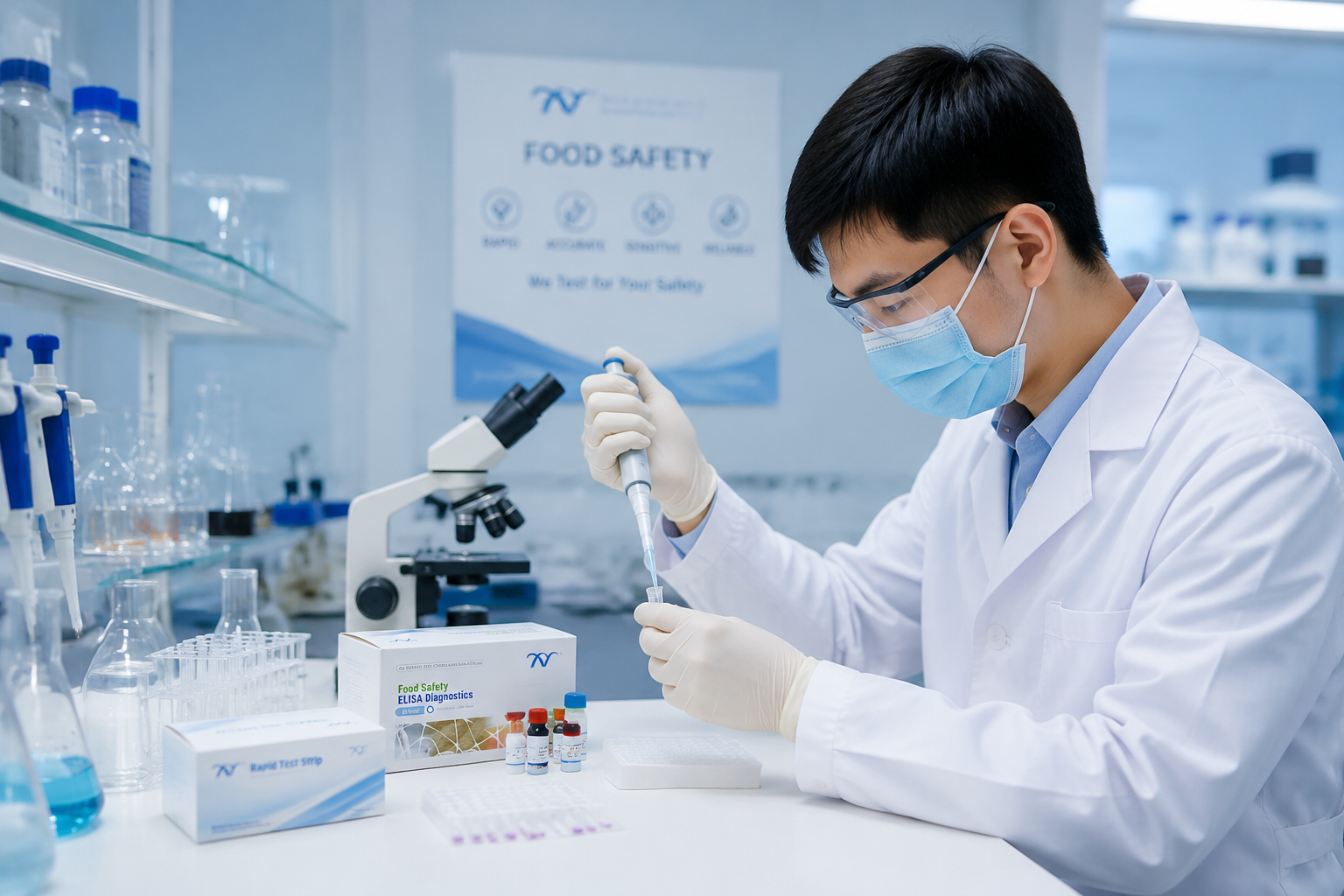
Rapid test strips and lateral flow assays provide convenient solutions for on-site screening, enabling operators to quickly evaluate potential risks without relying entirely on centralized laboratories.
These technologies are particularly valuable in environments where fast decisions are required, such as food production facilities, farms, warehouses, and inspection sites.
Combining Speed with Accuracy
While rapid screening provides efficiency, accurate laboratory verification remains essential for comprehensive quality management.
By combining rapid detection methods with laboratory-based technologies such as ELISA testing, food companies can establish a more complete monitoring system.
Rapid tests help identify potential risks quickly, while ELISA kits provide sensitive and reliable analysis for confirmation and quality assurance.
This combination creates a balanced approach between operational efficiency and analytical accuracy.
Technology Supporting Smarter Food Safety Management
The future of food safety will depend not only on advanced detection technologies but also on smarter management strategies.
Companies are increasingly looking for testing solutions that are easy to operate, reliable, and adaptable to different application scenarios.
As a professional food safety testing company, Beijing Kwinbon Technology Co., Ltd. continues to focus on immunodiagnostic technology development, providing global customers with rapid test strips, ELISA kits, and customized detection solutions.
With continuous innovation in detection technology and product development, Kwinbon supports food producers, laboratories, and inspection organizations in building more effective food safety management systems.
Building a More Preventive Future
Food safety is no longer only about responding to problems after they occur. The future belongs to organizations that can identify risks earlier and manage them more effectively.
Through advanced rapid testing technologies and reliable laboratory solutions, preventive food safety strategies will continue to play a vital role in protecting consumers and strengthening global food supply chains.
Post time: Jul-29-2026